Choosing a paint-by-numbers kit can feel exciting — until you reach the colour options.
24 colours, 36 colours, 48 colours… suddenly, the decision doesn’t feel so simple.
Is more always better?
Will fewer colours affect how your painting looks?
And how do you choose the right option for your design?
This guide explains the real differences between 24, 36, and 48 colour paint-by-numbers kits, so you can choose with confidence — and with realistic expectations.
Why Colour Count Matters in Paint-by-Numbers
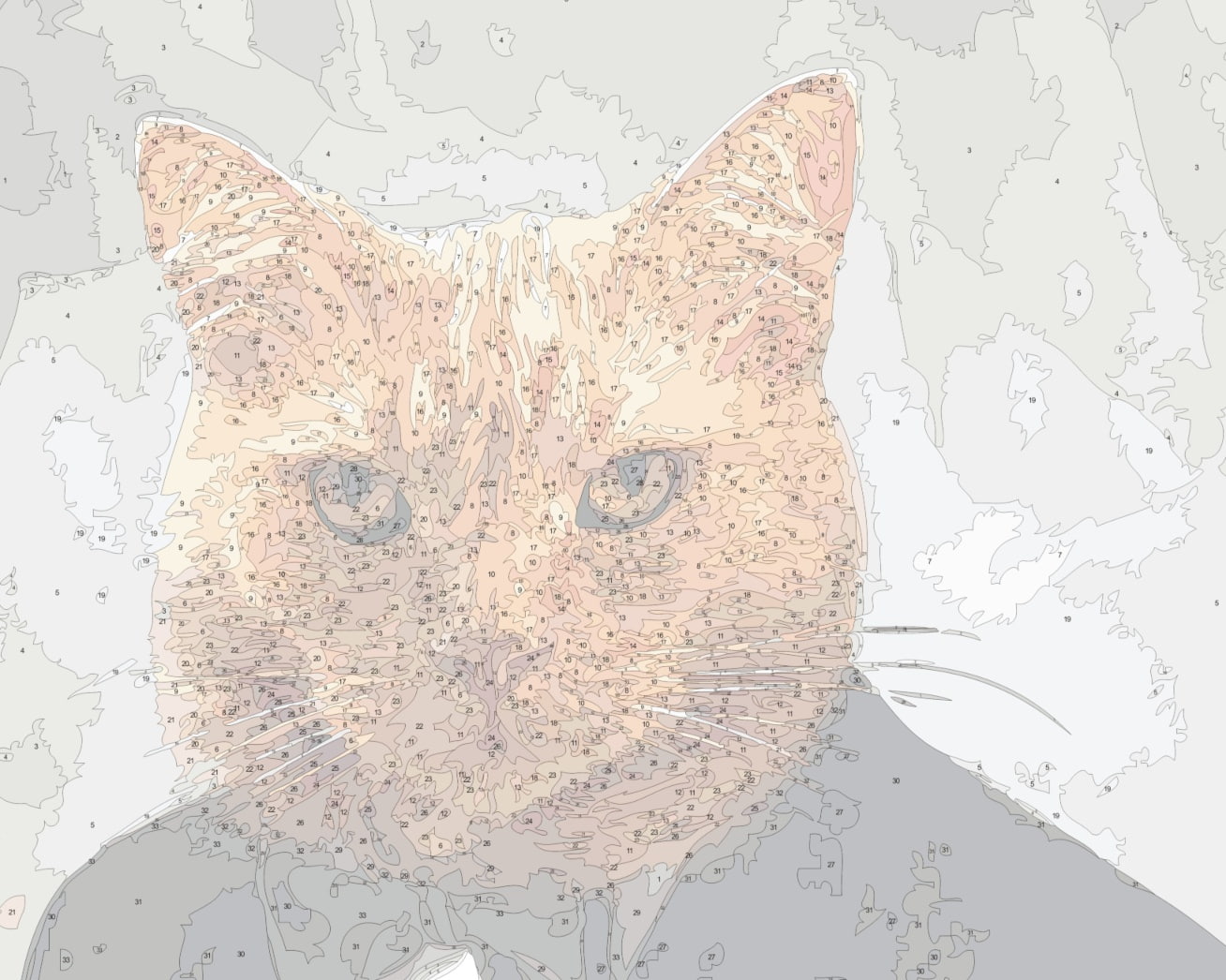
Whether you’re choosing a custom paint-by-numbers kit or one of our ready-made designs, every painting begins the same way — as an image filled with far more colours than can be painted individually.
Even a single artwork may contain hundreds or thousands of subtle colour variations, including shadows, highlights, reflections, and gentle gradients.
Paint-by-numbers works by translating that image into a limited colour palette that is:
- clear to follow
- enjoyable to paint
- visually balanced when finished
This process always involves simplification.
The number of colours you choose determines how much colour detail is preserved, and how much is intentionally merged to maintain harmony and paintability.
Importantly, paint-by-numbers is not photo printing — it’s an artistic interpretation designed to be painted by hand.

24 Colours: Clean, Calm, and Beginner-Friendly
A 24-colour kit uses a smaller, carefully selected palette.
To achieve a clear and enjoyable result, similar shades within the artwork are combined into shared colours.
What this means visually:
- Larger colour areas
- Fewer subtle transitions
- A simplified, illustrative look
Best for:
- Beginners
- Simple compositions
- Designs with clear shapes and limited colour variation
- Anyone seeking a relaxing, low-pressure painting experience
What to expect:
If a design contains rich colours or complex lighting, the final painting may differ slightly from the original artwork. Fine gradients are simplified to maintain overall harmony and ease of painting.
This is not a flaw — it’s a design choice that prioritises calm and clarity.
36 Colours: Balanced Detail and Enjoyable Flow
A 36-colour kit is the most popular option for a reason.
It offers a comfortable balance between detail and simplicity.
What this means visually:
- More nuanced colour transitions
- Better definition in shadows and highlights
- A result that feels closer to the original design without becoming overwhelming
Best for:
- Most custom images and ready-made designs
- Pets, flowers, and landscapes
- Designs with moderate lighting variation
- Painters who want detail without added complexity
What to expect:
36 colours allow greater tonal accuracy while keeping the painting process smooth and enjoyable. For most customers, this is the safest and most versatile choice.
48 Colours: Maximum Detail and Realism
A 48-colour kit uses a broader palette, allowing finer distinctions between similar tones and greater depth overall.
What this means visually:
- Greater realism
- More subtle shading and dimension
- Less colour merging in detailed areas
Even with 48 colours, a paint-by-numbers kit is still an artistic interpretation of the original artwork — not an exact replica.
Designs with richer colours, detailed shading, and complex lighting naturally benefit from more colours. However, to keep the painting clear, balanced, and enjoyable to complete, very similar tones may still be merged.
The goal of paint-by-numbers is to translate an image into a paintable artwork, balancing detail, harmony, and painting experience rather than achieving perfect image-level accuracy.
Best for:
- Designs with rich colours and complex lighting
- Portraits and pets with detailed fur or facial features
- Landscapes with layered shadows and highlights
- Painters who enjoy detail and don’t mind a longer process
What to expect:
48 colours preserve more of the original artwork’s character, but the result will still feel hand-painted — not printed.
Does More Colours Mean Better?
Not necessarily.
More colours also mean:
- more paint pots
- smaller colour sections
- longer painting time
“Better” depends entirely on your goal.
- If you want a calm, meditative experience → fewer colours may suit you better
- If you want a more detailed, realistic result → more colours are worth it
There is no universally “best” option — only the right fit for your design and your expectations.

Why Paint-by-Numbers Can’t Be 100% Image-Accurate
This is something many customers appreciate knowing upfront.
Paint-by-numbers kits are designed to be:
- paintable by hand
- visually cohesive
- enjoyable from start to finish
To achieve this, very similar colours are sometimes intentionally merged — even in higher colour counts. Without this step, paintings can become confusing, cluttered, and frustrating to complete.
In short:
Paint-by-numbers is about turning an image into a balanced artwork — not copying it exactly.
Understanding this helps explain why different colour options exist, and why choosing more colours doesn’t always mean choosing “better” — it simply means choosing a different painting experience.
Our Approach at DIYpaintsy
At DIYpaintsy, our goal isn’t to replicate an image pixel by pixel.
It’s to transform it into a paintable, harmonious artwork you’ll genuinely enjoy creating.
Each design is carefully adjusted to suit the selected colour count, ensuring the final kit feels clear, balanced, and satisfying to paint — no matter which option you choose.